 Click to visit the previous Pterosaurs bio
Click to visit the previous Pterosaurs bio |
|
 |
|

Kingdom: Animalia
Phylum: Chordata
Order: Pterosauria
Family: Lonchodectidae
Genus: Lonchodectes
 |
|
 |
|
 |
|

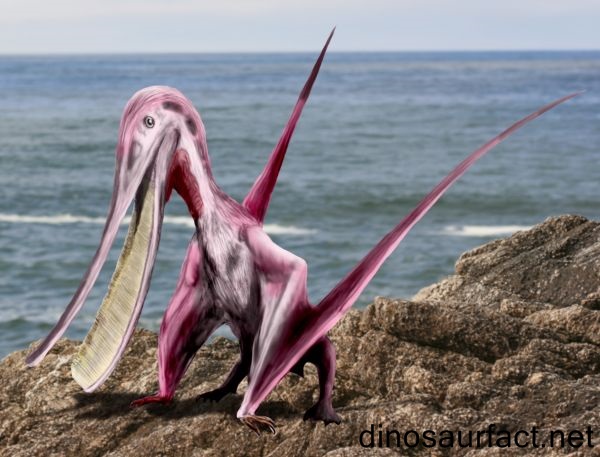
Lonchodectes, the meaning of which is nothing but a 'lance biter' belonged to the genus of the Azhdarchoid pterosaur reined in the ancient parts of England during the Valanginian to great Turonian age. The species was tagged with Ornithocheirus until Dr. David Unwin finally came to his conclusion in the year 2000. Still there were contradictions among the scientists with the perfect genus of the lance biter, the sea gull like bird Lonchodectes.
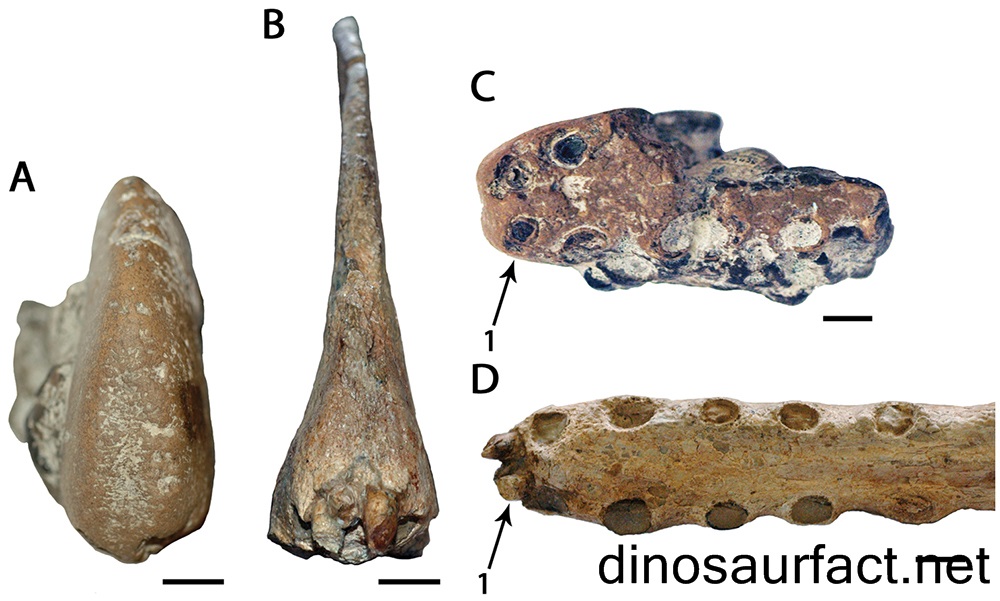
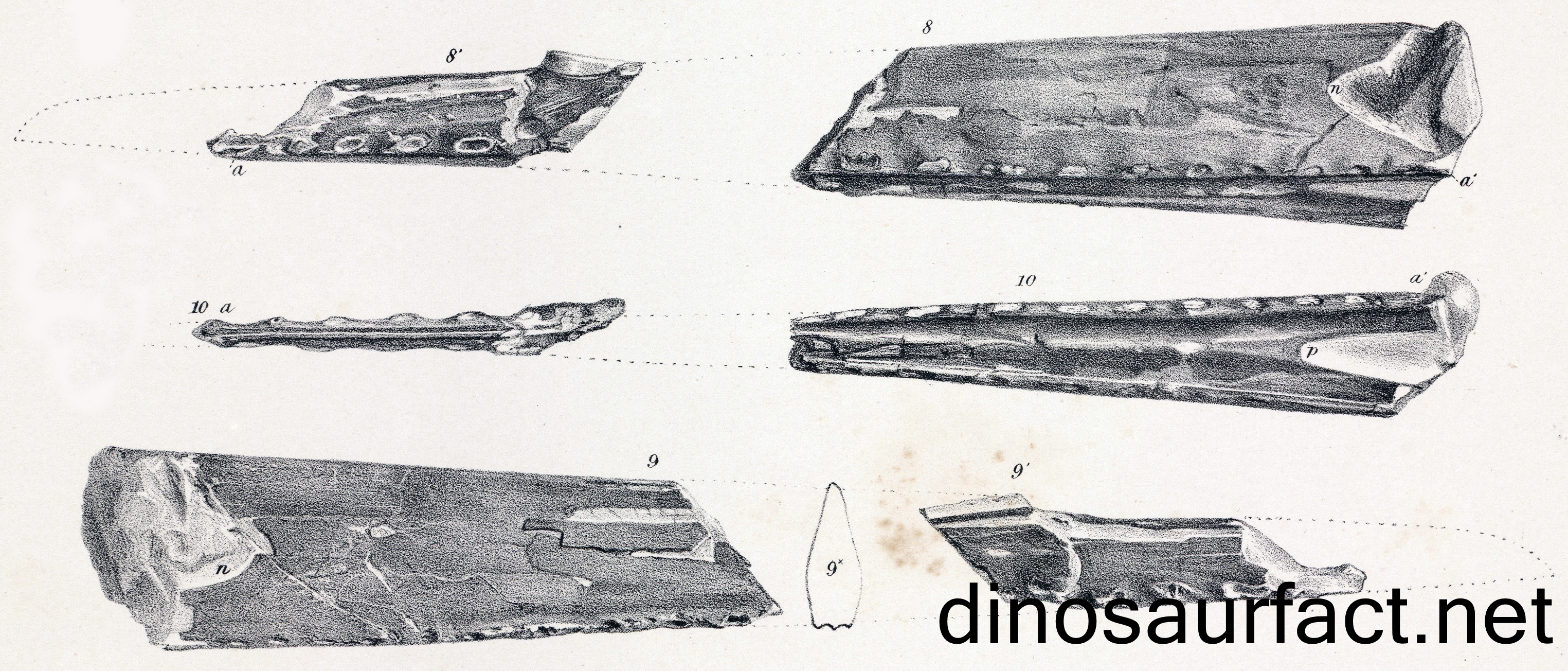
Near Kent a part of the upper jaw was recovered. Scientist Richard Owen ventured to name the fragment as a species similar to Pterodactyl in 1851, it was named Pterodactylus. Harry Govier Seeley named in the later period as Ornithocheirus in the year 1870. In the year 1914 Reginald Walter Hooley renamed it as Ornithocheirus. The term Lonchodectes came into being after a long period.
We cannot know much of the genus. It is on he other hand is no accepted by he scientists all over the globe. Hence there is always a mystery surrounding the originality of the Lonchodectes. In the Illustrated Encyclopedia of the Pterosaurs it is given the same status with the Ornithocheirus. It was Unwin who considered the Lonchodectes as a kind of bird like the sea gull as it had the same type of jaws and teeth very similar o the sea gulls. According to Unwin the maximum wingspan of the Lonchodectes was not more than 6.6 feet. Besides, the species had small teeth in a long jaw. The jaws were found compressed in a vertical manner too.
Though Unwin was the fist man to bring the species to the limelight it was not a very easy task for him. He had to go through various contradictions whether the species discovered could be named Lonchodectes. Before Unwin there was the instance of a species named L.compressirostris. It was about to be associated with the species of Lonchodectes. When the fragments of the body remains were found Unwin named it Lonchodectidae. Unwin grouped he species with the Ctenochasmatoids and the Azhdachoids.
Though much light has been thrown on the species it is perhaps assumed that the species was found somewhere in the vast tracts of Kent in England . There are galore of controversies regarding the genus of the sea gull like bird. But Hooley and Unwin did not give up. They through a series of close examinations tried to prove that Lonchodectes was a separate species. It had no relation with any other that came in close proximity with the Lonchodectes. It derived of a different genus.
From the fossils of the Lonchodectes it is quite assumed that the bird was not as big as the Pterodactyls. It might be a prototype of the giant bird that was a avid hunter on the air. Lonchodectes, it is assumed, was a species that lived on fish. Hence it is assumed that Lonchodectes used to live near the marsh lands or at close proximity of the sea water. Fish was the only thing that it preferred. It is revealed through the structure of the beak.
Index
 Home
HomeExtinct Profiles
 Triassic Dinosaurs
- Jurassic Dinosaurs
- Cretaceous Dinosaurs
 Pterosaurs
 Marine Reptiles
 Dinosaur Extinction
 Earth Timelines
 Hadean Eon
 Antarctica
 Africa
 Asia
Asia Australia
 Europe
 North America - Canada
 North America - Mexico
 North America - USA
 South America
 Basic Groups
 Dino stuff for sale
 Dinosaur Sounds
 Dino Wallpapers
 Dino general FAQ
 Dinosaur Games
 Terra Nova thanks us
 English
 Español
 Wristbands