 Click to visit the previous Pterosaurs bio
Click to visit the previous Pterosaurs bio |
|
 |
|

Kingdom: Animalia
Phylum: Chordata
Order: Pterosauria
Family: Anurognathidae
Genus: Jeholopterus
 |
|
 |
|
 |
|

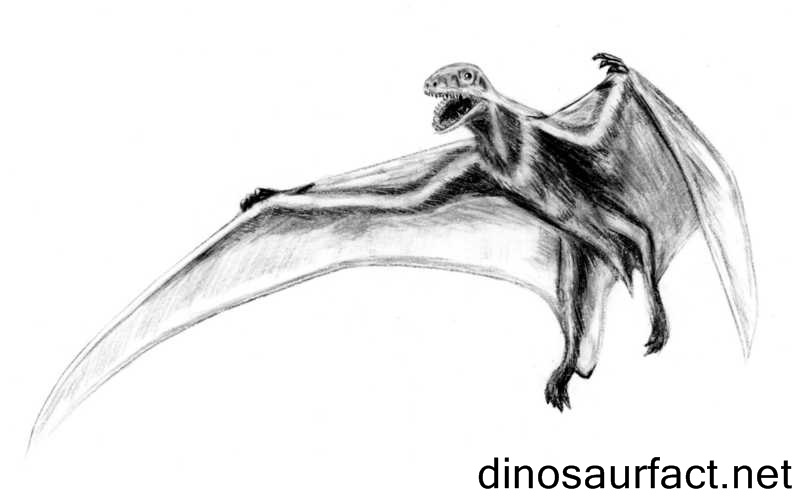
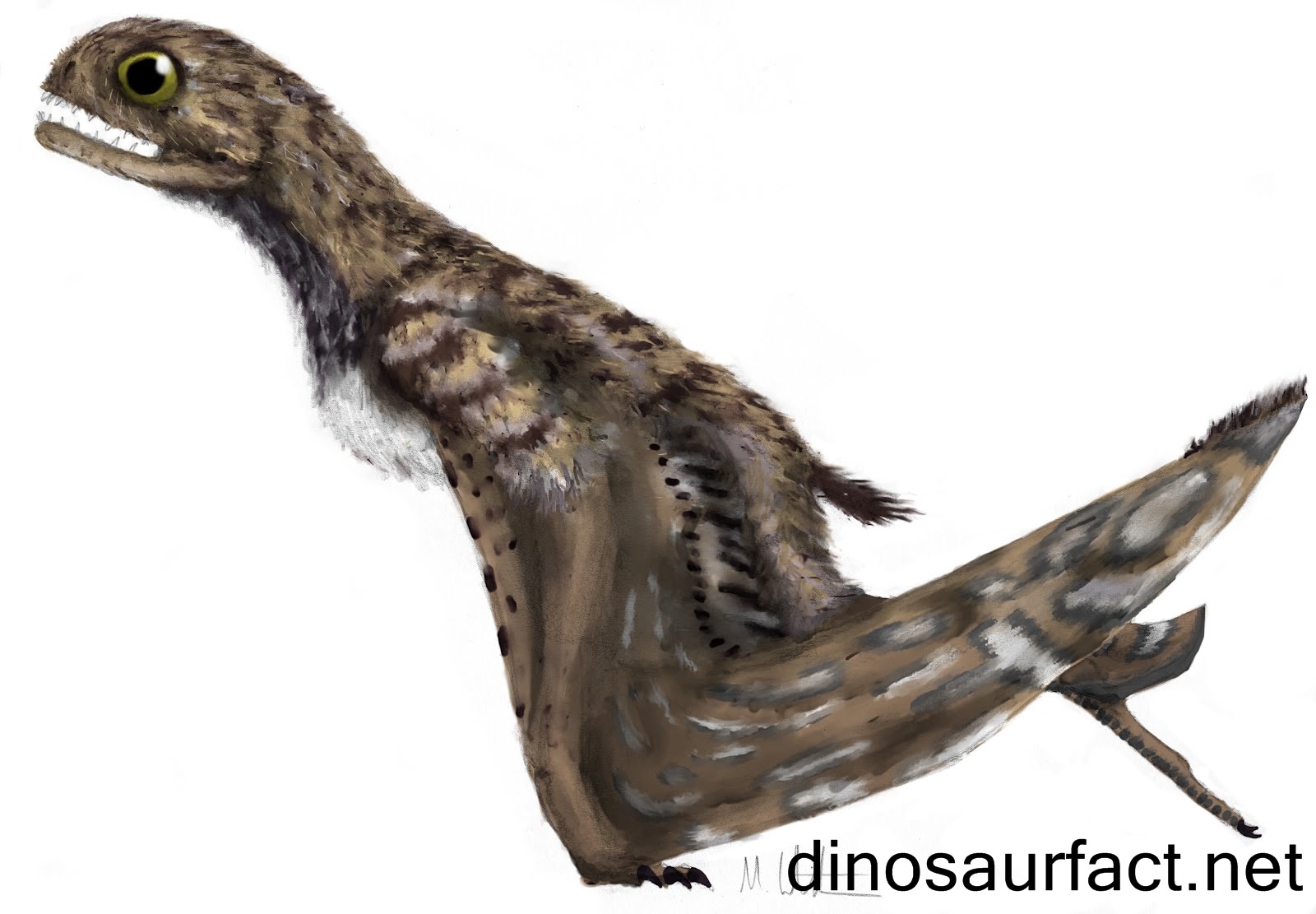
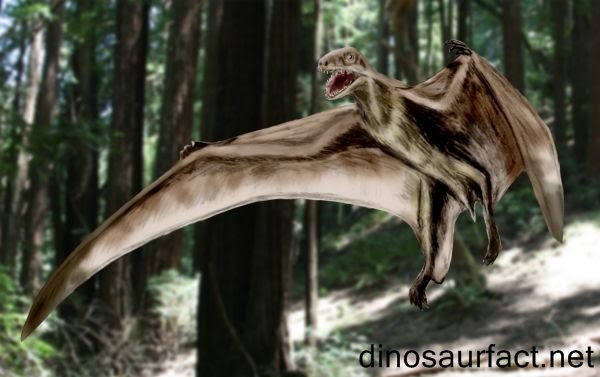
The term Jeholopterus was derived from Greek and the meaning of the term is Jehol wing. The term is pronounced as Jay-hole-op-ter-us. This creature was known to have in the shores of the continent of Asia about 150 million years ago. In Asia, it was particularly known to have lived in the northeastern part of China in the Daohugou Beds. It would have got a wingspan of about 3 feet and they would have fed on insects. It would have got a blunt and large head with pointed tooth and large claws. The skin and hair remains of this creature are still preserved. Jeholopterus are classified under the kingdom of animalia and chordate phylum.
Jeholopterus was different from the garden-variety of pterosaur. It differentiated from other pterosaurs by its unusually sharp and large claws. It might have got a widely articulated jaw, which it could open wider as compared to any other pterosaur. It would have got a cat-like head and a short tail.
Some paleontologists believe that, Jeholopterus would have adhered to the backs of large dinosaurs and would have sucked their blood to feed themselves. But, this habit of Jeholopterus was not proved.
This creature got its name from Xu Xing, Zhou Zhonghe and Wang Xiaolin in the year 2002. The scientific name of the genus is Jeholopterus ninchengensis. The term Jehol is derived from the place of China from where the fossils were found and the term pterus was derived from Greek word the meaning of, which are wings. The term ninchengensis was derived from the Nincheng County.
The fossils were flattened into a counter slab and slab pair, in such a way that one part of the fossil is preserved in one part of the split stone and other parts in some other stone. The preserved parts include carbonized skin fibers, protofeathers and hair as well. The fibers are conserved around the body of the sample in a circle of light. The wing tissues are also conserved, even though the level is arguable, inclusive of the point of attachment to the legs. The arguable fact is that whether the lags are attached or not. In the year 2009, a report was published by Alexander Kellner, which shows the existence of three layers of fibers in the wing.
The neck of Jeholopterus would have got seven to eight cervical vertebrae. They would have got twelve to thirteen dorsal vertebrae and three sacrals as well. They would have got five pairs of belly ribs.
They are classified under reptilia class and pterosauria order. They are further classified under the suborder of Rhamphorhynchoidea under the family anurognathidae. Generally, short tail is unusual in case of rhamphorhynchoid, but they are common in anurognathids and so they are classified under the family of anurognathidae.
The wing bones of Jeholopterus were healthy and they had short metacarpals. Jeholopterus would have got a curved and long hand claws. Their wing bones show that they would have attached to the ankle. They also had strong legs and the toes of the legs would have got curved claws. But, the claws in the legs are shorter than that of claws in the hands.
Index
 Home
HomeExtinct Profiles
 Triassic Dinosaurs
- Jurassic Dinosaurs
- Cretaceous Dinosaurs
 Pterosaurs
 Marine Reptiles
 Dinosaur Extinction
 Earth Timelines
 Hadean Eon
 Antarctica
 Africa
 Asia
Asia Australia
 Europe
 North America - Canada
 North America - Mexico
 North America - USA
 South America
 Basic Groups
 Dino stuff for sale
 Dinosaur Sounds
 Dino Wallpapers
 Dino general FAQ
 Dinosaur Games
 Terra Nova thanks us
 English
 Español
 Wristbands