 Click to visit the previous Pterosaurs bio
Click to visit the previous Pterosaurs bio |
|
 |
|

Kingdom: Animalia
Phylum: Chordata
Order: Pterosauria
SubOrder: Euornithocheira
Family: Ornithocheiridae
Genus: Caulkicephalus
 |
|
 |
|
 |
|

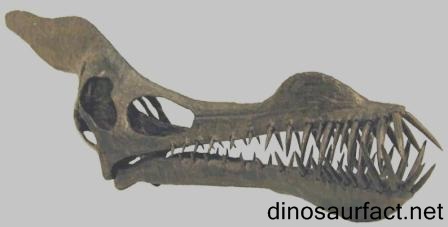
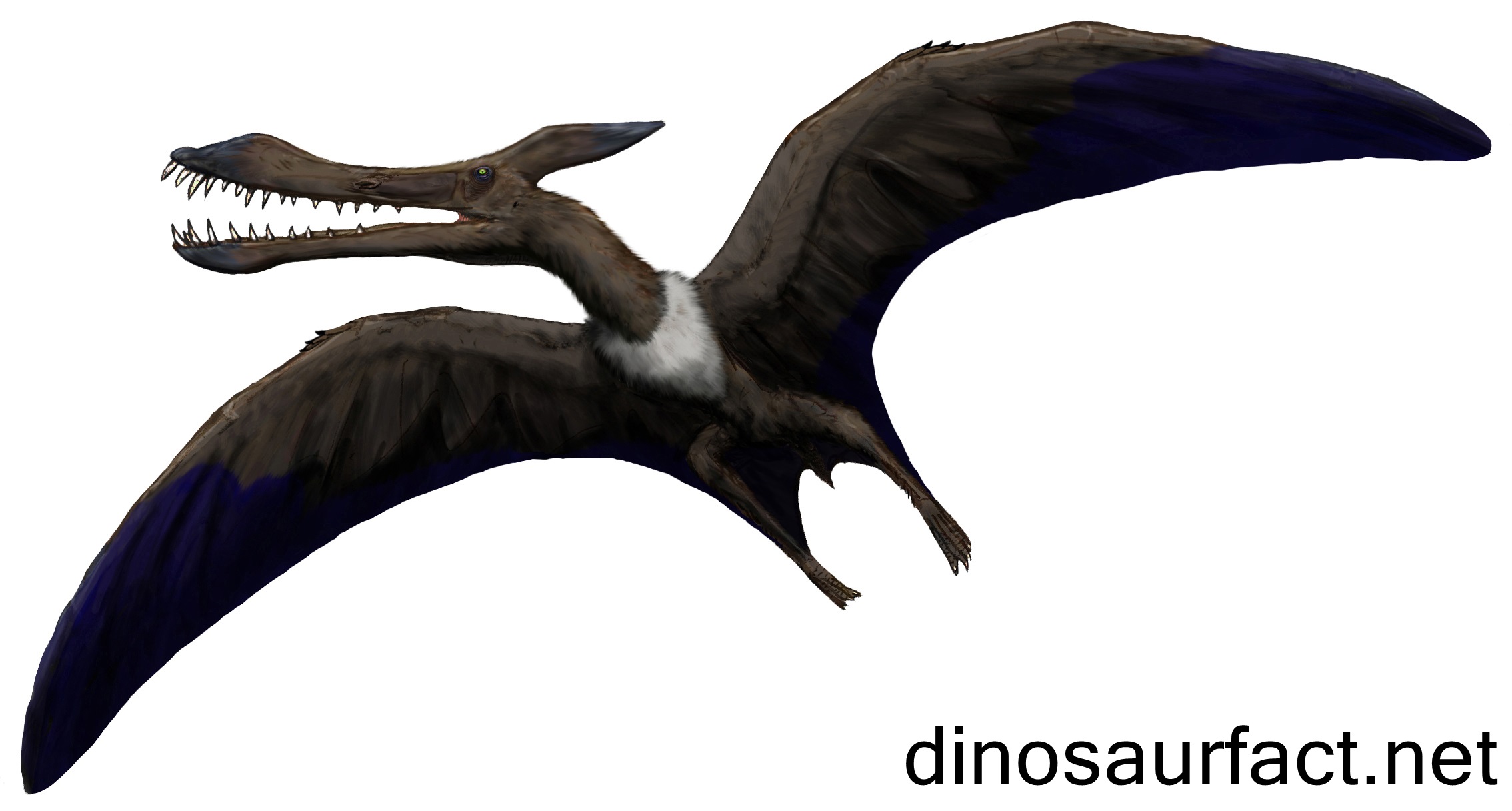
The term Caulkicephalus is spelled as CORL-kee-KEPHER-luss. The meaning of the term is Caulk Head, which is the slang name for Isle of Wight residents. This name was given since it was found in the weight off the coast of England. Caulkicephalus is classified under the group of pterodactyloid. It was not having a tail. It had a mouth full of teeth and this was used by Caulkicephalus for catching fish while in flight. It did not only possess a pteranodon-like crease at the back of its head, but it possessed a keel-like crest on its beak. It was found that Caulkicephalus would have lived in the early cretaceous era.
Between the year 1995 and 2003 bone specimens of an unknown pterosaur was found near the Sandown locality of Yaverland and in the year 2005 another new specimen was found and was named by David Martill, John Winch, David Unwin and Lorna Steel. The type creature is Caulkicephalus trimicrodon. The term trimicrodon means ‘three small teeth'.
The specimen found in Wight was not complete. But, it had unique configuration of teeth and it represented a new kind of ornithocheirid. Researchers were able to identify it as Caulkicephalus on the basis of six pieces of skull, out of which three fit together to form the anterior of the rostrum. The rest of the three pieces being the jugal, a quadrate and braincase. They were not able to find any tooth of Caulkicephalus. They also found some postcranial elements as well.
The air sac in lung of Caulkicephalus of the rostrum differs in size from 1-4 and 8-10. Followed by the second pair the third pair is the largest. The initial four pairs of large air sacs are followed by three very small air sacs. Following these there are a further three large alveoli and after this the fossil is broken. Air Sacs No. 9 and 10 are spread out rather than parallel. There were replacement teeth emerging without air sacs No. 9 and 10. In cross-section the tooth are oval in shape. The front tip of the palate was curved at air sacs 1 and 2 upwards at an angle of nearly 45 degrees. The palate has several openings in between the four pairs of air sacs. They were linked and paired by a 5-6mm long groove. The maxilla-premaxilliary suture has a posterior descent.
There is a small pit following the right air sacs that could be a pathological feature or it might have been a cause of a recent damage. The medial palatal ridge is invisible in the lateral view and is not pronounced and they disappear between the air sacs 8 and 9. According to some evidence, researchers found that the specimen has broken off and it had no premaxillary crest. At the back of the skull, there was a parietal crest, but most part of this is also missing and it consisted only two thin sheets of compacta, which was separated by a system of fine trabeculae. These crests are separate and not connected.Index
 Home
HomeExtinct Profiles
 Triassic Dinosaurs
- Jurassic Dinosaurs
- Cretaceous Dinosaurs
 Pterosaurs
 Marine Reptiles
 Dinosaur Extinction
 Earth Timelines
 Hadean Eon
 Antarctica
 Africa
 Asia
Asia Australia
 Europe
 North America - Canada
 North America - Mexico
 North America - USA
 South America
 Basic Groups
 Dino stuff for sale
 Dinosaur Sounds
 Dino Wallpapers
 Dino general FAQ
 Dinosaur Games
 Terra Nova thanks us
 English
 Español
 Wristbands