 Click to visit the previous Marine Specie bio
Click to visit the previous Marine Specie bio |
|
 |
|

Kingdom: Animalia
Phylum: Chordata
Class: Sauropsida
SuperOrder: Sauropterygia
Order: Nothosauria
Family: Nothosauridae
Genus: Lariosaurus
 |
|
 |
|
 |
|
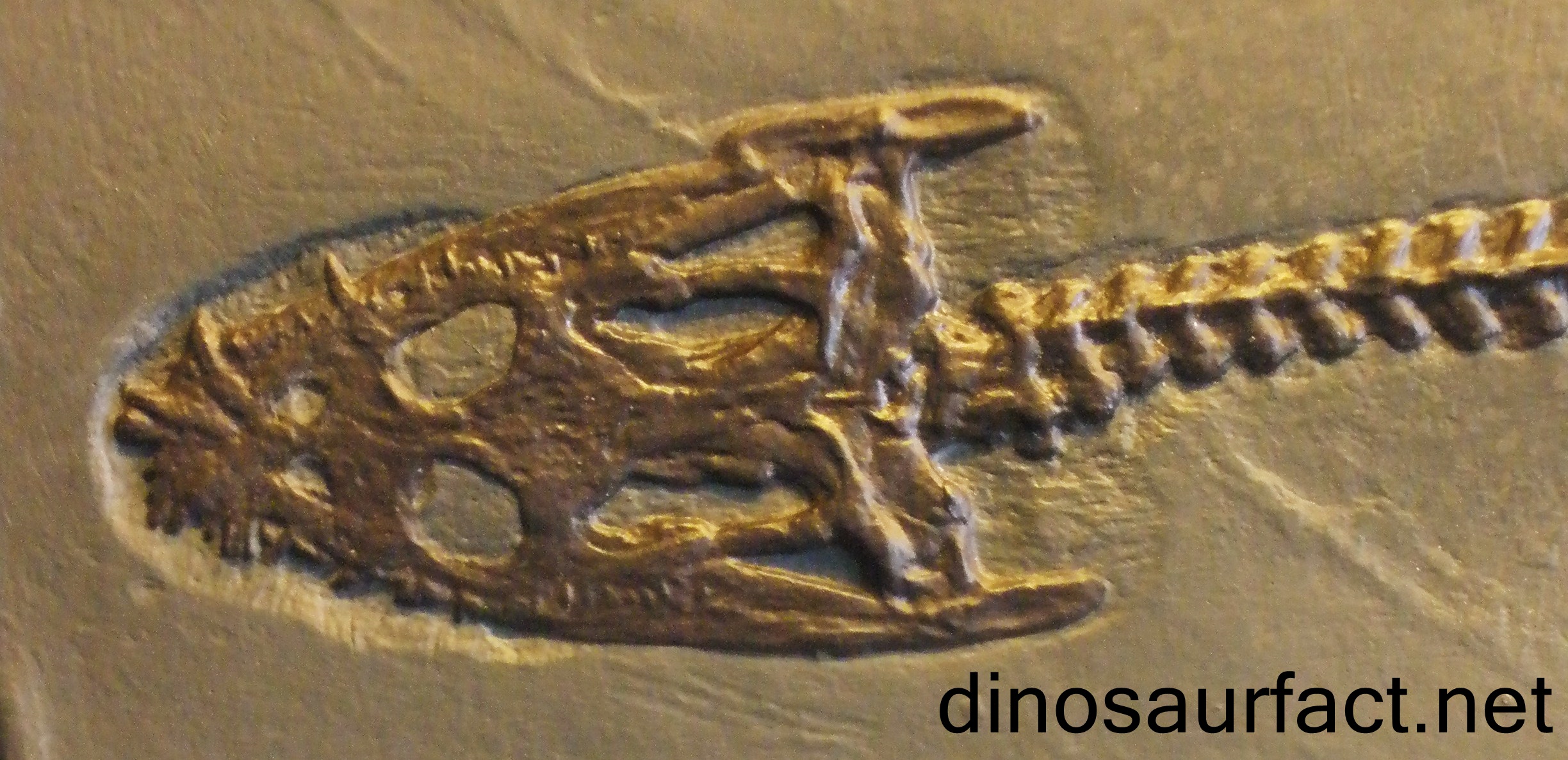
The Lariosaurus was tiny primitive nothosaur that was in existence in the middle Triassic period. It lived between the Ladian and Carnian ages of the Triassic period. This was about 240 to 225 million years ago.
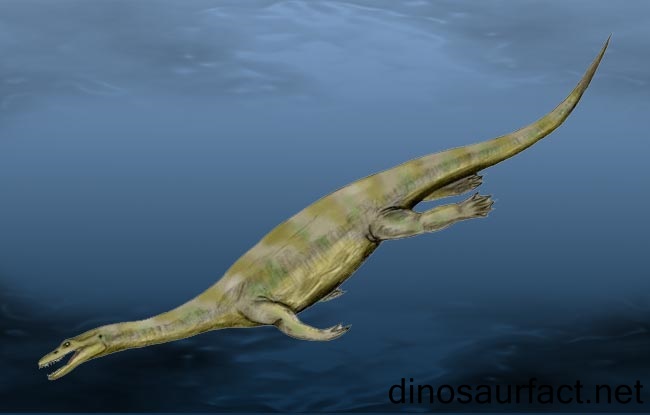
The Lariosaurus was very small in stature. Its length was about 50 to 60 centimeters and its body weight is estimated to be around 2.5 to 4 kilos. This was very small as compared to the more evolved Nothosaurs which averaged at 2.5 to 3 meters in length.
The physical features of the Lariosaurus were different as compared to other Nothosaurs. Its body was not completely adapted to an aquatic lifestyle. This indicates that it was probably one of the first Nothosaurs to be seen on the earth. Furthermore, it also indicates that the Lariosaurus may have spent a substantial part of its life on land.
The Lariosaurus had carnivorous feeding habits. This makes it likely that it evolved from carnivorous terrestrial reptiles.
Nomenclature
The name 'Lariosaurus' is derived from Lake Como, where the fossils of the Lariosaurus were first found. 'Lario' is a synonym of Lake Como. The district adjoining the lake is also called Esnio Lario.
The word 'saurus' is derived from the Greek word 'sauros' which means lizard in English. Thus the name Lariosaurus roughly translates to 'the lizard hailing from Lario'.
The specific name Lariosaurus balsamii was chosen to honor the naturalist Gabriel Balsamo Crivelli, who studied and described the fossils of the Lariosaurus.
These remains were named by scientist Julius Curioni.
Discovery of fossils
- The holotype of the Lariosaurus was discovered in Perledo, Italy near Lake Como in 1830. These bones were examined by Balsamo Crivelli, but there was very little data to compare these remains with. Hence, Balsamo Crivelli refrained from christening them.
- Another set of remains were discovered in Bavaria a few years later which are today attributed to the Lariosaurus.
- The fossils discovered in the Monte San Giorgio formation in Switzerland are described as the Lariosaurus valceresii.
- Certain bones discovered in Israel are also ascribed to the Lariosaurus and are named the L. stensioei.
- Remains of the Lariosaurus were also discovered from China and were christened the L. xingyensis and L. hongguoensis.
- There also are some fossils from Spain and France which are believed to belong to the Lariosaurus.
Many of the above mentioned fossils consist of complete skeletons.
Classification
- The Lariosaurus is classified under class Sauropsida, order Nothosauria and family Nothosauridae. These taxonomic divisions were only recently defined and at the time of its discovery, the classification of the Lariosaurus was not clear.
- The fossils found in Bavaria were first classified under genus Macromirosaurus, but on detailed study it was found that they belonged to the Lariosaurus.
- The genus Eupodosaurus is also believed to be a synonym of the Lariosaurus today.
- The Deirosaurus, once believed to be a pliosaur, is also classified under the genus Lariosaurus today.
- A few scientists also believe that the Ceresiosaurus is the same as the Lariosaurus. Such opinions form a minority though.
Gabriel Balsamo Crivelli
Gabriel Joseph Balsamo Crivelli was a nineteen century Italian scientist. He was born in Pavia and graduated from the University of Pavia in 1824. His initial interest included biology and natural history.
By the mid-1800s, he acquired degrees in zoology and mineralogy. While serving as the director of the Pavian Museum of Natural History, he was charged examining the remains of the Lariosaurus.
The fungus 'Balsamia' is named after Crivelli.
Physical features
- The Lariosaurus was a petite reptile. The largest discovered specimens were only 120 centimeters in length. The average length of the Lariosaurus was only 70 centimeters. Its weight is believed to be no more than 3 to 5 pounds.
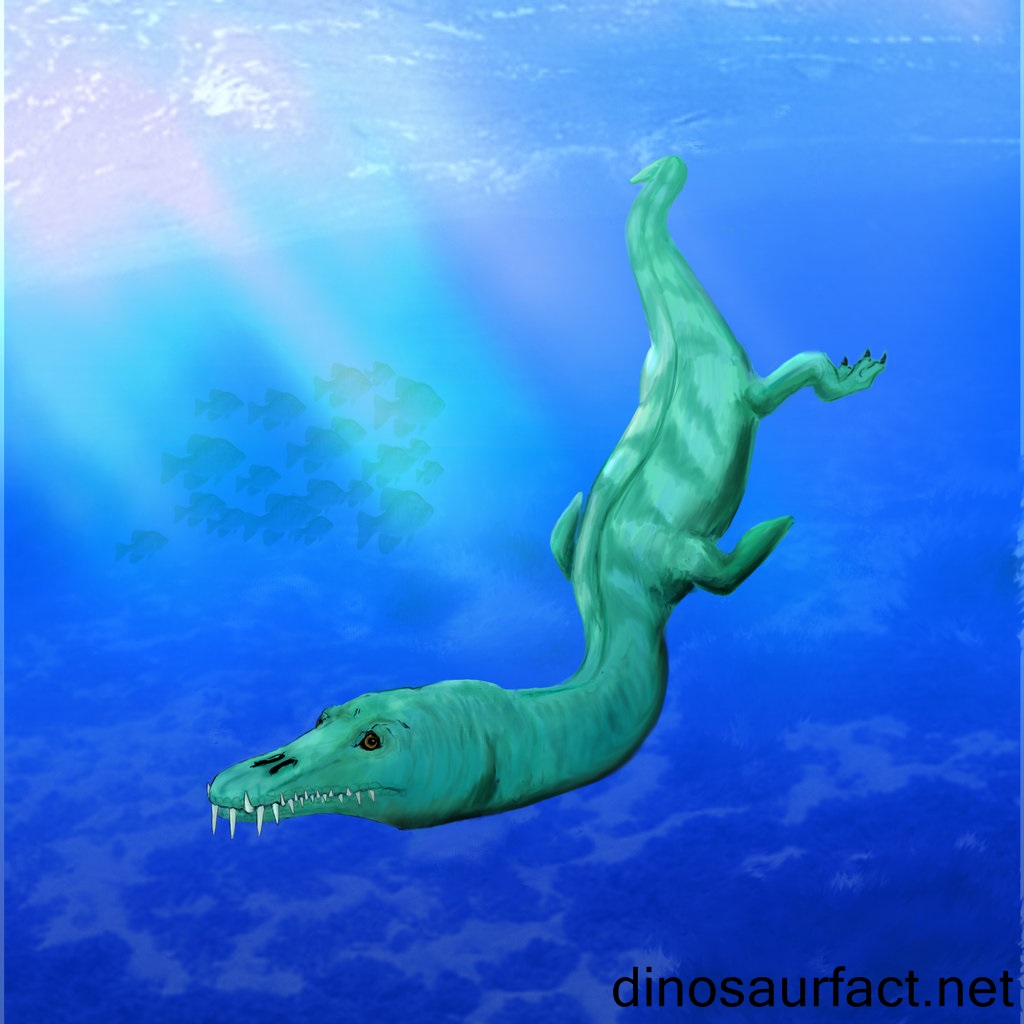
- The head of the Lariosaurus was long, as shown by its elongated jaws. The teeth at the cranial end of the jaws were long and their alignment was very tight when the Lariosaurus shut its jaw.
- The limbs of the Lariosaurus have a distinct feature. Its legs were small in size and the forelimbs were modified to form flippers. The hind legs however had still retained five digits. It is unknown if these were webbed.
- This shows that the Lariosaurus was transitioning into an aquatic environment.
- The Lariosaurus had a thick ulna and humerus. Thus, perhaps its fore legs were more muscular and stronger than its hind legs.
- The thorax of the Lariosaurus comprised of heavy ribs, indicating that it likely possessed a muscular torso as well.
- The tail of the Lariosaurus was slim and long.
Habits and habitat
The Lariosaurus was definitely a carnivore. Its dentition was a very typical carnivorous. Moreover, the skeleton of the placodont Cyamodus was discovered inside the abdominal cavity of the Lariosaurus. This clearly showed its preferred diet as well.
Paleontologists believe that the Lariosaurus was viviparous. Juvenile specimens were found inside the skeletons of many Lariosaurus fossils and these young ones were not disarticulated. This excludes cannibalism to some extent.
The habitat of the Lariosaurus consisted of shallow waters such as rivers, ponds and lakes. Due to the morphology of its hind legs, many scientists believe that the Lariosaurus was a poor swimmer and visited dry land very frequently.
Related and coexisting species
The Lariosaurus was most likely related to the Pachypleurosaurs and the Nothosaurus.
It shared it habitat with placodonts, squids, cephlopods etc. As the Cyamodus was found inside the skeleton of the Lariosaurus, it can be said with certainty that both these organisms coexisted.
It could have coexisted with the Keichousaurus in Asia.
Epilogue
The Lariosaurus was one the smallest and most primitive Nothosaurs. Its body was adapted for both terrestrial and aquatic settings. This is a very strong indication that the ancestors of the Lariosaurus were terrestrial; it was an intermediate species between land dwelling reptiles and the fully aquatic Nothosaurs of the Triassic and Cretaceous periods.
The fossils of the Lariosaurus have been found everywhere in Europe and Asia. This shows that it was very commonly found on the eastern shores of Pangaea (the supercontinent consisting of all seven modern continents), before Pangaea began to disintegrate.
The discovery of the Lariosaurus was vital in understanding the transition of vertebrates from the terrestrial to the marine habitat.
Index
 Home
HomeExtinct Profiles
 Triassic Dinosaurs
- Jurassic Dinosaurs
- Cretaceous Dinosaurs
 Pterosaurs
 Marine Reptiles
 Dinosaur Extinction
 Earth Timelines
 Hadean Eon
 Antarctica
 Africa
 Asia
Asia Australia
 Europe
 North America - Canada
 North America - Mexico
 North America - USA
 South America
 Basic Groups
 Dino stuff for sale
 Dinosaur Sounds
 Dino Wallpapers
 Dino general FAQ
 Dinosaur Games
 Terra Nova thanks us
 English
 Español
 Wristbands